
Where has all the outrage gone? Long time ago.
You say you want a revolution
Well, you know
We all want to change the world
You tell me that it's evolution
Well, you know
We all want to change the world
But when you talk about destruction
Don't you know that you can count me out
—The Beatles’ “Revolution” from 1968
It’d be easy to say that “protest music” began in the 1960s. It would also be convenient to cite the Vietnam War as the muse for many an artist who began to see and understand what was wrong with the United States’ involvement in on-going war in Southeast Asia.
But ease and convenience have no basis in reality.
If you Google the history of protest music you might be shocked to know that something as seemingly harmless and beautiful as Beethoven’s “Ode to Joy” (written as a poem by Friedrich Schiller in the summer of 1785) was a celebration of the brotherhood of man, and considered one of the very first sonic expressions of hope. John Lennon even referenced it in his anthemic “Imagine.” And there are other examples of pre-20th century songs of hope and purpose. But we’re going to look deep into the last centennial for the songs, not movements, that either poetically or blatantly called out an injustice or some cultural or interpersonal aberration.
The impetus for a piece like this one was the realization that songs of protest, as they once were, pretty much ring hollow these days. Maybe artists who decide to take up the mantle of some cause or moment of outrage (like the George Floyd incident or some other mind-f**king behavior by authorities) seem a bit too detached from the actual abuse of power. There’s no discernible feeling or connection to the subject matter being sung about that we can actually grasp. Call it cynicism, or maybe call it some old guy pining for the days of pot, patchouli, and passionate pop tuneage behind a message of outrage.
But there has to be something to the music of old if the young ‘uns of today are attaching themselves to it. Just the other day, I heard some present-day pop princess duetting with Elton John on his 1971 song “Tiny Dancer.” Ok, not a protest song. But it does speak to the reality that a good song is a good song. It transcends time and trends.
And don’t even get me started about The Beatles. Talk about music that atomizes the confines of time and era. But we’ll get to them later on.
When deciding to write about defining protest songs, initially I wanted to avoid the obvious ones that have been held up on high for decades. You know the ones — where the impact of their initial message just seems like mere pageantry at this point. A great example of that is “We Shall Overcome.”
Incarnated from a 1901 hymn entitled “I’ll Overcome Some Day,” it was used formally, for the first time, as a protest song during a labor strike against American Tobacco in Charleston, S.C., during the 1940s. African American women rallied for a pay raise to .30 cents an hour, all the while singing “We Will Overcome.” Then in 1952 it was recorded by Laura Duncan as “We Shall Overcome.” It was then adopted as the hopeful call to action hymn for the Civil Rights Movement.
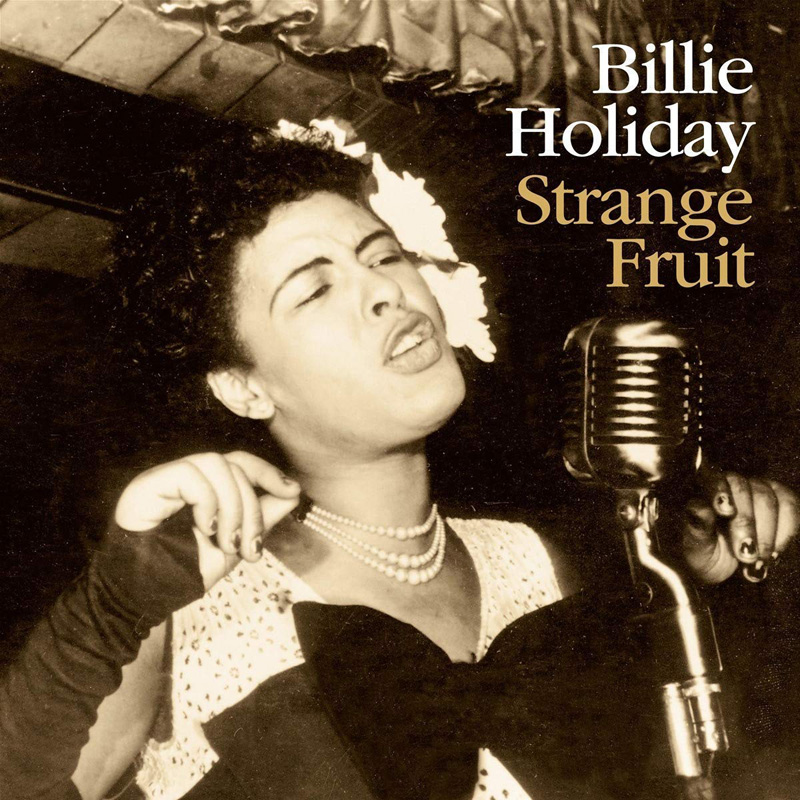
But if you truly want to find just one song that embodies the reason for discernible and actionable advancement for Civil Rights, it’s “Strange Fruit.” Originally written as “Bitter Fruit” — an anti-lynching protest poem, and then a song — by Abel Meeropol in 1937, it became the signature song for one of the most pained, emotive singers of all time, Billie Holiday.
“Southern trees bear a strange fruit
Blood on the leaves and blood at the root
Black bodies swinging in the southern breeze
Strange fruit hanging from the poplar trees…”
We’ve all seen those reprehensible pictures of beaten and burned Black folks hanging from branches back in the earlier part of the 20th century. It’s almost incomprehensible, but it happened. We needed to know and understand that it happened. “Whitewashing” (pardon the expression) will do nothing to advance the recognition that Blacks and whites are exactly the same. Showing the pictures, reading the descriptions of the bodily desecration, and listening to a song like “Strange Fruit” — considered the first widely disseminated protest song — drives the point home much more than hopeful hymns of societal and psychological deliverance.
Of course, we could go back even further and include the songs and hymns that slaves would sing while literally in the midst of their servitude. A good lot of the tunes being sung were communication vehicles — calls to action, really. It’s been rumored that for the chief engineer on the Underground Railroad, Harriet Tubman, her favorite signaling tune was “Swing Low, Sweet Chariot.” Whenever that tune was sung, it was allegedly a two-minute warning to let everyone within earshot know that the time to escape was at hand and to get ready for the journey.
And I suppose you could include spirituals in the protest song category. But, as most tunes of protest are about some past or present injustice — be it racial or sexual discrimination, unfair labor practices or something else — the writing of the tune and singing is done in relative safety, far away from the actual danger. Traditional protest songs are more observational. What the slaves were singing about was in real time. Their safety (and that of their kin) literally hung in the balance from the moment they woke up until they went to sleep. They were actually living a crime against humanity. So these devotional odes were akin to morse code. Their very lives depended on understanding what was being sung, and when to engage their plan of escape.
So spirituals deserve a very honorable mention here. But they don’t necessarily qualify as the traditional, disassociative “Isn’t that a shame and we should do something about it” protest song.
Then we had the war in Vietnam. This is where the rubber really hit the road when it came to expressing dissent in songs you couldn’t exactly dance to. Just about every genre of pop music addressed the United States’ involvement in the Vietnam War. But if you wanted to identify the very first song to express discountenance with our so-called “aid to anti-communist forces” in Southeast Asia, it would have to be Phil Ochs’ “Talking Vietnam Blues” in 1964 (some might argue it was “What Are You Fighting For,” a song he recorded a year earlier. But “Talking Vietnam Blues” was unequivocal in its condemnation). It’s almost a remonstrative chronology of our entanglement over there up to that point, as well as a general scoffing at the verbiage used by the government to mollify the American public about the goings-on in the country.
Then you had other folk luminaries of the era — Baez, Seeger, Guthrie — taking up the mantle and trying to take it a notch further. But, like so often happens, the message gets either watered down or lost in unintelligible ramblings or vocal histrionics.
Surprisingly, Bob Dylan really wasn’t a part of that crowd. He even liked to say he “didn’t write no protest songs,” which is true. Even “Only a Pawn in the Game,” about Medgar Evers, and “Hurricane” — the 8:33 opus detailing the railroading of boxer Rubin Carter — were more laments than dissents.
And then there was a tune that essentially acted as a bridge from the hyper-austerity of the folk world’s objections to the Vietnam War, to the rock and soul arenas: Barry McGuire’s “Eve of Destruction.”
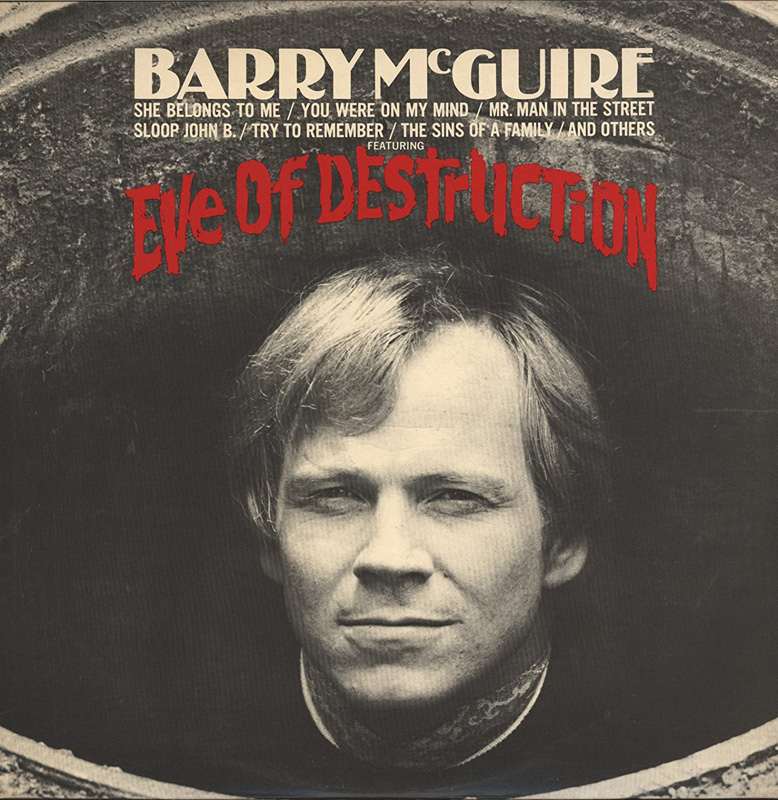
What makes “Eve of Destruction ” so worthy of being mentioned in the same piece as “Strange Fruit” is its bluntness. Just :20 seconds into the song, songwriter P.F. Sloan pulled absolutely no punches when it came to calling out the government on its constitutional hypocrisy by reminding everyone who was 17 years old and able to enlist in all branches of the military, that they were “old enough to kill, but not for votin’.” At the time the song was released in 1965, the voting age was 21. It wouldn’t be for another six years until President Nixon signed the 26th Amendment into law, lowering the voting age from 21 to 18. Still, the sentiment of the lyrics remained the same.
The other line that really drove home the point of much of the citizenry’s moral duplicity at the time was “Hate your next door neighbor, but don’t forget to say grace.” That lyric in particular
Illuminated the whole “do as I say, not as I do” mentality of a lot of American families back then. Looking deeper into situations like Vietnam, Civil Rights, and the spiritual health of our religious institutions wasn’t a real consideration for much of our population. Folks didn’t want to hear the kind of truths being sung about from a newcomer like Barry McGuire. In fact, because of its so-called controversial lyrics, some American radio stations claimed it was, here again, essentially an aid to the North Vietnamese and banned the song. That’s when you know a nerve has been hit.
It would be another four years until a song with the appropriate measure of anger would address the war in Southeast Asia. John Fogerty of Creedence Clearwater Revival penned a tune that spoke to the class disparity when it came to who got drafted or enlisted and went off to actually fight that war, and who did the same and actually didn’t. If you look at statistics of who made up the boots-on-the-ground troops in Vietnam, they mostly came from poor-to-middle class families — the ones who kept, and still keep, the infrastructure of this country humming. Once you start to climb into the ether of wealth and privilege (and subsequently influence), the military-aged sons and daughters of the Masters of Industry and influential politicians at the time could be stationed way out of harm’s way. Still, they can say they served during Vietnam, which sure looked impressive on a resume.
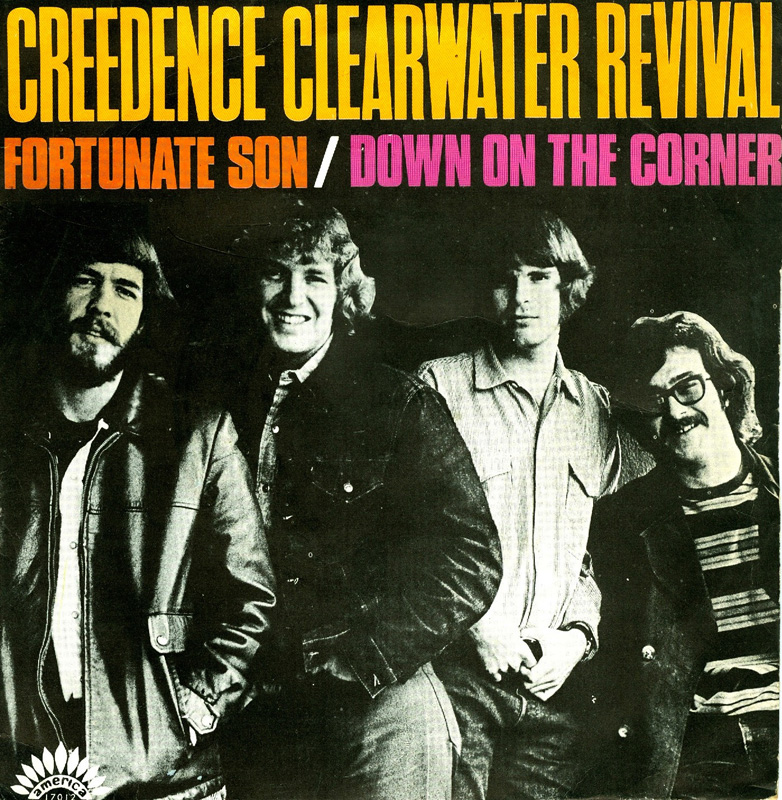
The prevailing tone of “Fortunate Son” is rage — THAT is what makes a protest song truly impactful. Calling out those in the entrenched power structure for their faux-patriotism, their standards of the double variety, their ambivalence, and their Teflon attitude is essentially the playbook of any song whose purpose is to wake up the body politic.
But wait — where are The Beatles in all this? Well, let’s back up a year to 1968 and take a look at their tune “Revolution.” The White Album version of that song, “Revolution 1,” was just way too mellow, coupled with the fact that Paul McCartney didn’t want to invite controversy — something John Lennon was not only used to, but flirted with quite often. But John wanted “Revolution” to be the band’s next single regardless. So they re-recorded it with distorted guitars and a whole lot of angry vocals from Lennon. While it’s technically a protest tune and demonstrates upset toward “the institution,” “Revolution” is really more of John Lennon’s amazing wordplay on top of some raucous rock music. It wasn’t specific, it didn’t point fingers, and it neglected to make us feel pissed off. If there was any sort of “governor” on this track that essentially bridled John’s fury, it was Paul McCartney. He was hyper aware of how the world held The Beatles up in the rarefied air, and he didn’t want that put in jeopardy.
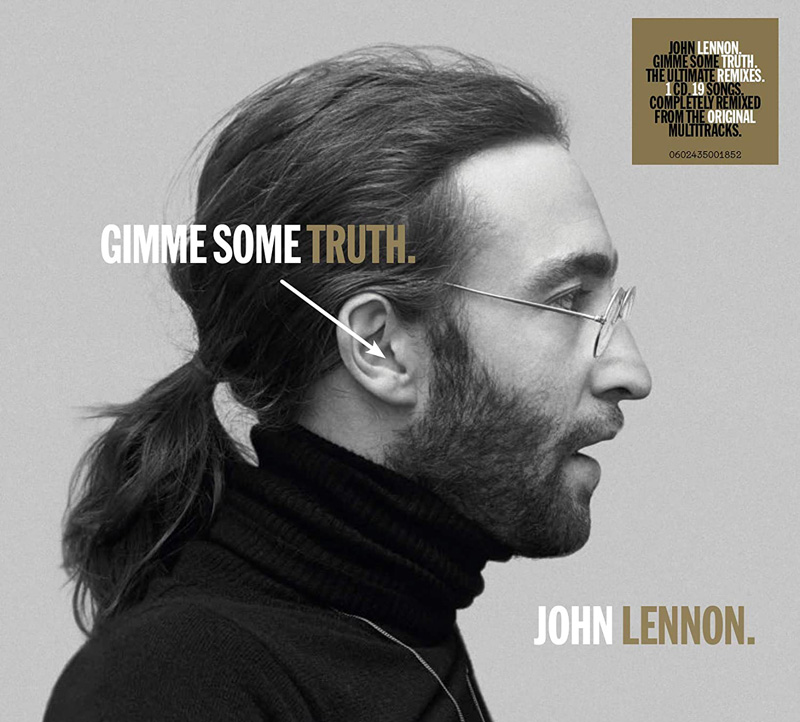
That said, John Lennon DID immerse himself in songs of directed indignation during the early years of his solo career. From the “Imagine” album, “Gimme Some Truth” is yet another example of his angry poetry. Only this time he calls out the many toadies of then President Nixon:
“No short-haired, yellow-bellied, son of tricky Dicky
Is gonna mother hubbard soft soap me
With just a pocketful of soap
Money for dope
Money for rope”
Vietnam, Anti-Vietnam War Protestors, the beginning of the war on drugs, demonizing those who used marijuana, who just so happened to be Nixon’s biggest detractors — the protestors, Black folks, academics.
“Gimme Some Truth” was unapologetically angry and named Dick Nixon. Check.
Now, you might be wondering where the pro-woman anthems are. No “I Am Woman?” No “I Will Survive?” Well, Helen and Gloria, I respectfully submit the following for your consideration…
There’s a song that was originally recorded by a group called The Persuaders back in the early 70s called “Thin Line Between Love and Hate.” Written by Richard and Robert Poindexter, as well as Jackie Members, it’s a tune that you wouldn’t think would fit into an article like this one, but au contraire.
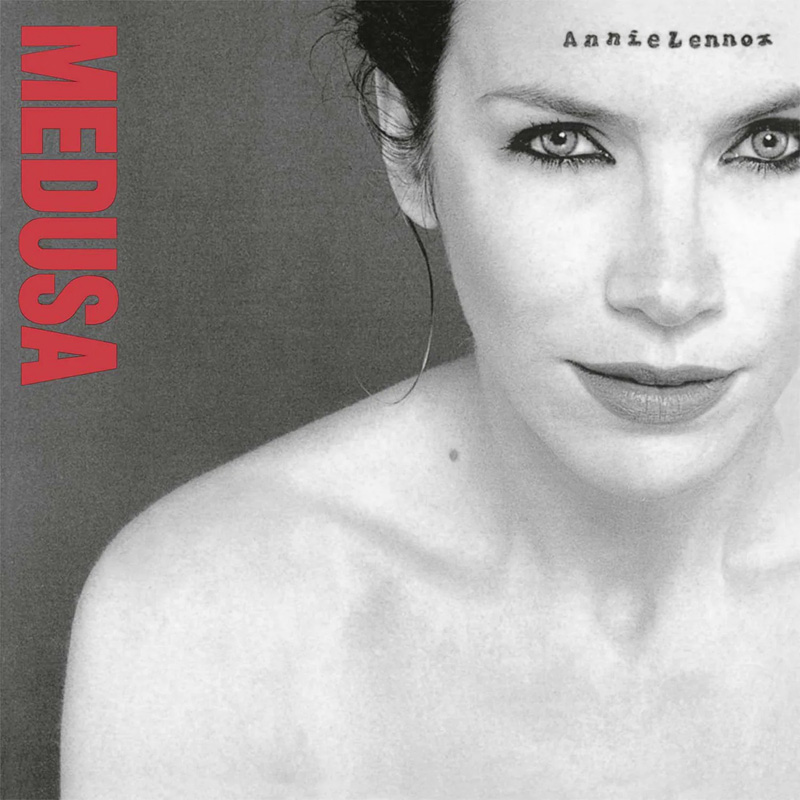
While The Persuaders’ original version is soulful and beautiful, it just doesn’t capture the necessary anger that the lyrics dictate. Chrissie Hynde and The Pretenders resurrected it for their album “Learning to Crawl” from 1984. It was a respectful cover of the original version. But it wasn’t until 11 years later when Annie Lennox made it seethe with appropriate red-hot rage on her album “Medusa,” that the song became an anthem for disregarded and abused women everywhere.
It’s about a man coming home early in the morning just one too many times to his infinitely patient wife. She’s sweet, understanding, and dutiful to a thoughtless, obviously cheating husband. All is seemingly copacetic until the instrumental bridge of the song. He then finds himself lying in a hospital, “bandaged from foot to head.”
The song begins with what can only be described as a simmer, water beginning to boil on a stove. During the bridge it begins to boil, and you can literally “see” what she’s doing to this heartless man she calls her husband.
Consider these lyrics:
The sweetest woman in the world
Could be the meanest woman in the world
If you make her that way
You keep on hurtin' her, she keeps being quiet
She might be holding something inside
That really, really hurts you one day
Too violent? Well, when you consider what way too many women have been through at the hands of men for time ad infinitum, a 4:53 narrative of necessary comeuppance is nothing in the scheme of it all. If nothing else, this very pro-woman empowerment tune should serve as a possible failsafe if someone finds themselves in an abusive, even life-threatening relationship with a man.
The coda to the song showcases Annie Lennox just repeatedly, painfully bellowing “Come on Baby Baby, you don’t give a damn about me…”
Anger. Again, that is what makes a song of protest powerful. It also has to be specific — brutally honest and not long-winded. If it just so happens to be catchy, all the better. The majority of the so-called anthems of the past 60-plus years — whether it’s been for civil rights, anti war, pro woman, gay rights, anti-gun — just don’t pack the necessary punch that songs like the ones I listed here do. Yes, Sam Cooke’s “A Change is Gonna Come,” John Lennon’s “Imagine” and “Give Peace a Chance,” and “Freedom” from Richie Havens are all powerful and beautiful. But they just don’t instill indignation, rage, empowerment, or a call to action.
Dancing around a subject or equivocating for the sake of not offending the oversensitive will never affect positive, effective change. As George Carlin once reminded, “they’re just words.” Juxtaposed with genuine, applicable fury, that’s when a protest song might actually get folks to engage the cause in question.
As for songs from the 21st century that attempt to address our prevailing issues, as previously alluded to, it’s social media oversaturation, too much sheen, and not even a CliffNotes understanding of the severity of the problem at hand by the songwriter or artist involved that render them asystolic. Which is why we’re hearing newer, more flaccid versions of older tunes — anthemic or not. Again, there’s a tragic disconnect.
But going back to “Strange Fruit.” You might argue that Billie Holiday’s tragically appropriate rendering wasn’t exactly angry sounding. But there was a tangible mourning in her voice — a knowing devastation. It’s practically a funeral dirge. Couple that with the visuals she was singing of, and it just couldn’t be any more powerful.